
Table of Contents
Introduction
The Hidden Giants of the Reef
Beneath the sparkling blue of tropical oceans lie some of the most extraordinary creatures you’ve likely never noticed—the fabulous giant clams. Anchored firmly in coral reefs, these massive mollusks can grow up to four feet wide and weigh more than 200 kilograms, making them the largest living bivalve on Earth. Despite their enormous size, giant clams often blend seamlessly into their surroundings, camouflaged by a dazzling array of colors and patterns on their mantles. Far from being passive lumps on the seafloor, these hidden giants are vibrant, living parts of the reef ecosystem, pulsing with light and teeming with life. Their quiet presence plays a crucial role in shaping the very foundation of coral reefs.
Why Giant Clams Matter
The fabulous giant clams are not just reef residents—they are reef engineers. These creatures perform a surprising dual function: they contribute physically to reef structure through the buildup of their calcium carbonate shells, and biologically through their symbiotic relationship with photosynthetic algae. Acting like living solar panels, giant clams harness sunlight to feed themselves and, in turn, help nourish the surrounding reef environment. Their filtering activity keeps water clear, and their large shells offer shelter for countless small organisms. In short, giant clams are keystone species—vital to reef health, resilience, and biodiversity. Understanding and protecting them is essential for preserving the future of coral reef ecosystems.
Meet the Giant Clam
What Exactly Is a Giant Clam?
The fabulous giant clams belong to the genus Tridacna, a group of large, tropical saltwater clams known for their impressive size and vivid coloration. The most iconic member, Tridacna gigas, holds the record as the largest bivalve mollusk in the world. Unlike many other shellfish, giant clams do not move once they settle on the reef. Instead, they become permanent reef dwellers, opening and closing their colorful mantles to bask in the sunlight. These clams are filter feeders, but their real energy source lies in a remarkable symbiotic partnership with algae living in their tissues—a feature that makes them truly unique among marine animals.

Species Spotlight: Tridacna gigas and Relatives
While Tridacna gigas gets most of the spotlight, there are actually around a dozen species in the fabulous giant clam family. Each varies in size, color, and habitat preferences. Species like Tridacna maxima and Tridacna crocea may be smaller, but they’re often more brilliantly colored, with electric blues, purples, and greens shimmering across their mantles. These smaller clams are frequently found in shallower reef flats and lagoons. Together, these species represent an incredible range of adaptations and ecological roles, each contributing to the richness of coral reef communities.
Where They Live: Habitat and Range
Giant clams are typically found in the warm, shallow waters of the Indo-Pacific region, from the Red Sea and the Indian Ocean all the way to the central Pacific islands. They thrive in sunlit coral reefs, lagoons, and reef slopes where water is clear and nutrient-rich. Their distribution overlaps significantly with some of the world’s most biodiverse marine ecosystems, including the Coral Triangle. Because they depend heavily on sunlight for their symbiotic algae to photosynthesize, giant clams are usually found no deeper than 20 meters. These habitats provide both the light and the stable surfaces they need to grow, reproduce, and support reef life.
Masters of Solar Power
The Clam-Algae Partnership
One of the most astonishing features of fabulous giant clams is their ability to harness solar energy. This is made possible through a symbiotic relationship with tiny photosynthetic algae known as zooxanthellae, which live inside the clam’s tissues. Much like coral, giant clams provide these algae with shelter and nutrients. In return, the algae use sunlight to produce sugars, which feed the clam. This mutualistic partnership allows giant clams to thrive in nutrient-poor tropical waters—effectively turning them into solar-powered animals. It’s one of the most elegant and efficient energy exchanges found in nature.

How Clams “Farm” Sunlight
To maximize this solar harvesting, giant clams have evolved translucent tissues and specialized structures within their mantles that act like light guides, channeling sunlight deep into their bodies where the algae live. Unlike passive hosts, giant clams can regulate the amount of light their symbionts receive by adjusting their mantle exposure or closing their shells slightly in bright conditions. This fine-tuned control means clams are not just living solar panels—they’re active farmers of sunlight, creating ideal growing conditions for the algae they depend on.
The Role of Zooxanthellae in Energy Production
The zooxanthellae within giant clams can supply up to 90% of the animal’s energy needs through photosynthesis. The sugars they produce are absorbed directly into the clam’s bloodstream, helping it grow, reproduce, and build its massive calcium carbonate shell. This high level of energy efficiency allows fabulous giant clams to remain sedentary for life, firmly anchored to one spot on the reef while still generating all the energy they need. Without this partnership, they would not be able to survive in the clear but nutrient-scarce waters where reefs are found.
Why Their Mantles Glow with Color
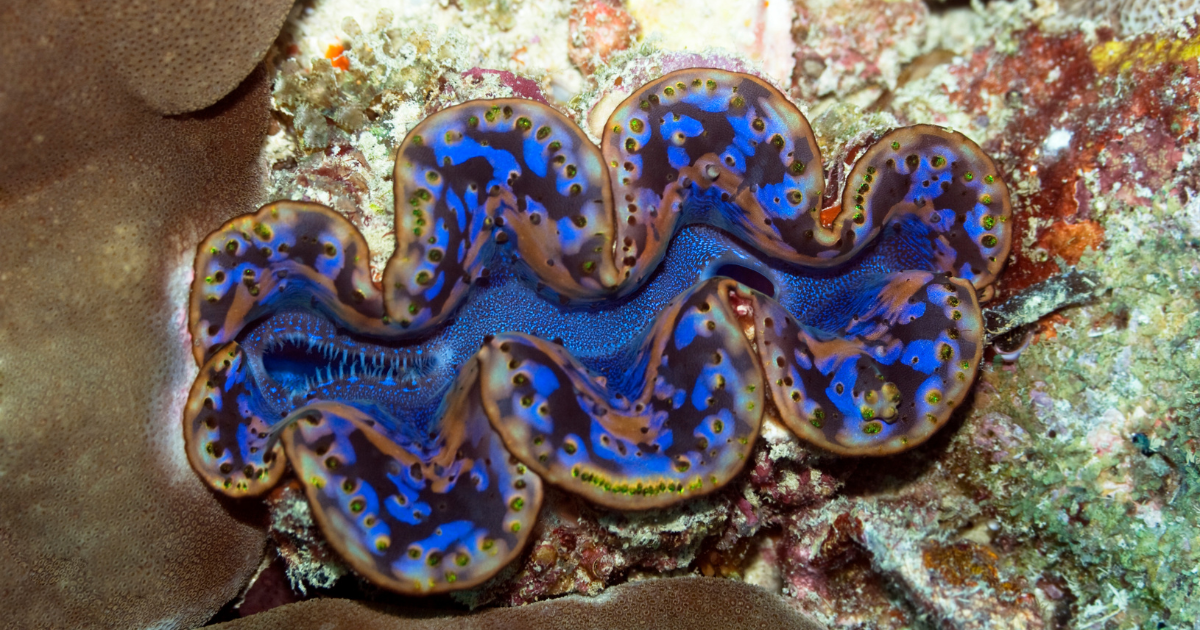
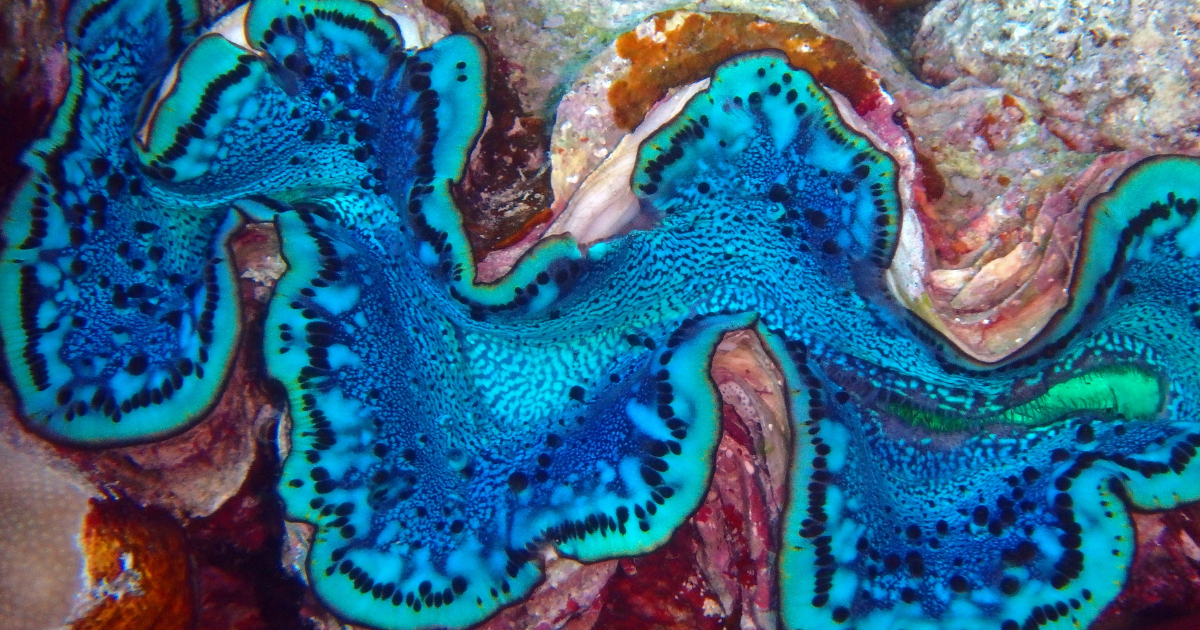
If you’ve ever seen a giant clam, the first thing you probably noticed was its dazzling, iridescent mantle. These stunning colors—ranging from electric blues and greens to deep purples and golds—are created by microscopic structures that reflect and scatter light. These structures don’t just make the giant clam beautiful—they also help optimize light for photosynthesis by diffusing it evenly to the algae. Some researchers even believe these colors might act as a form of “sunblock,” protecting the algae from harmful ultraviolet rays. In short, the clam’s glow is not just for show—it’s a brilliant adaptation for survival.

Clams That Shape Coral Reefs
Biogenic Builders: How Clams Contribute to Reef Formation
While corals often get all the credit for building reefs, fabulous giant clams play a surprisingly powerful supporting role. As they grow, their thick, ridged shells are made of calcium carbonate—the same material that forms coral skeletons. Over time, these shells accumulate and fuse with the reef structure, helping to expand and reinforce the reef’s physical framework. When clams die, their shells remain as solid reef substrate, creating new surfaces for corals to settle and other organisms to thrive. In this way, giant clams are essential biogenic builders—literally helping to build the reef around them.
Nutrient Recycling and Reef Health
Beyond structure, fabulous giant clams also help keep coral reefs alive through nutrient cycling. As filter feeders, they draw in water, removing microscopic plankton and organic particles. In the process, they excrete waste that contains vital nutrients like nitrogen and phosphorus, which fertilize nearby corals and algae. Their presence boosts the productivity of the entire ecosystem, fostering healthy coral growth and supporting a high diversity of marine species. Essentially, they act like living pumps that clean the water while feeding the reef.
Clams as Microhabitats for Other Marine Life
Each giant clam is like a miniature underwater apartment complex. Their large, grooved shells offer perfect hiding spots for small fish, crabs, snails, and even shrimp. Some creatures spend their entire lives within or around a single clam, benefiting from the protection and food resources it provides. The vibrant mantles of fabulous giant clams can also attract species that feed on algae or small detritus, turning the area around a clam into a hotspot of activity. In this way, giant clams serve not just as builders and recyclers—but as vital hubs of biodiversity on the reef.

Fascinating Facts About Giant Clams
They Can Weigh as Much as a Refrigerator
The largest species of fabulous giant clams, Tridacna gigas, can grow to over 4 feet (1.2 meters) in length and weigh more than 200 kilograms (440 pounds)—roughly the same as a standard refrigerator! Despite their size, they begin life as tiny drifting larvae, smaller than a grain of sand.
They Don’t Eat People—That’s a Myth!
A persistent myth suggests that giant clams can trap and eat unsuspecting divers. In truth, fabulous giant clams are harmless. They close their shells slowly and only in response to changes in light or movement, a defense mechanism rather than aggression. No confirmed case of a clam harming a human has ever been recorded.
Their Colors Are Created by Light Scattering
The spectacular colors of their mantles—often shimmering blues, greens, and purples—aren’t pigments. Instead, they come from microscopic structures that scatter and reflect light. These same structures help diffuse sunlight efficiently to the algae inside, aiding in photosynthesis and energy production.
They Change Sex as They Grow
Like many marine invertebrates, fabulous giant clams are hermaphrodites. They start life as males and become simultaneous hermaphrodites as they mature, capable of producing both eggs and sperm. This unique adaptation increases their chances of successful reproduction in the wide ocean.
A Single Clam Can Release Millions of Eggs
During spawning events—often triggered by lunar cycles or changes in water temperature—a single giant clam can release millions of eggs into the water. These eggs drift with the current, hoping to be fertilized and find a suitable spot to settle. It’s a reproductive strategy based on sheer numbers and luck.
Threats and Conservation
Overharvesting and Illegal Trade
For centuries, fabulous giant clams have been harvested for their meat, shells, and perceived medicinal value. In many coastal communities, giant clam meat is considered a delicacy, while their ornate shells are sought after for decoration and jewelry. Unfortunately, this demand has led to overharvesting in many regions, pushing some species to the brink of extinction. Illegal trade continues to thrive in certain parts of the world, despite international protections. The removal of giant clams from reefs not only threatens their survival but also weakens the entire reef system they help support.
Climate Change and Ocean Acidification
Climate change presents a more insidious and global threat to fabulous giant clams. Rising sea temperatures can disrupt their symbiotic relationship with algae, causing a bleaching effect similar to that seen in corals. Additionally, ocean acidification—a result of increased carbon dioxide absorption—weakens their shells and reduces the availability of calcium carbonate, the essential building block for their growth. These stressors make it harder for clams to survive, reproduce, and maintain their vital role in the ecosystem.
Conservation Efforts and Aquaculture
Despite these challenges, there is hope for the future of fabulous giant clams. Conservation programs and marine protected areas have helped stabilize some populations. Aquaculture initiatives, especially in Southeast Asia and the Pacific Islands, are now successfully breeding giant clams in captivity and reintroducing them into the wild. These efforts not only help restore reef health but also provide sustainable alternatives to harvesting wild clams. Educating local communities about the ecological value of giant clams has also been key in shifting perspectives from exploitation to stewardship.
Additional Resources for Marine Enthusiasts
- “Giant Clams: A Comprehensive Guide to the Biology and Aquaculture of Tridacnid Clams” by James Fatherree
- “Coral Reef Fishes” by Ewald Lieske and Robert Myers
- ReefBase – Giant Clam Information reefbase.org
- Marine Species Identification Portal marinespecies.org
- World Register of Marine Species (WoRMS) marinespecies.org