
Table of Contents
Introduction:
When most people think of peacocks, their minds immediately go to the dazzling fan of iridescent feathers, shimmering in blues and greens. But there’s far more to these majestic birds than their iconic tail displays. Peacocks—technically the males of the species Pavo cristatus—lead complex social lives, engage in elaborate courtship rituals, and communicate in surprisingly sophisticated ways.
The Peacock Beyond the Feathers
Peacocks are often celebrated for their jaw-dropping beauty, with their vivid, iridescent tail feathers stealing the spotlight. But there’s a compelling story that lies just beneath those shimmering plumes—a story of complex behaviors, survival strategies, and fascinating social dynamics.
The Allure of the Peacock’s Tail
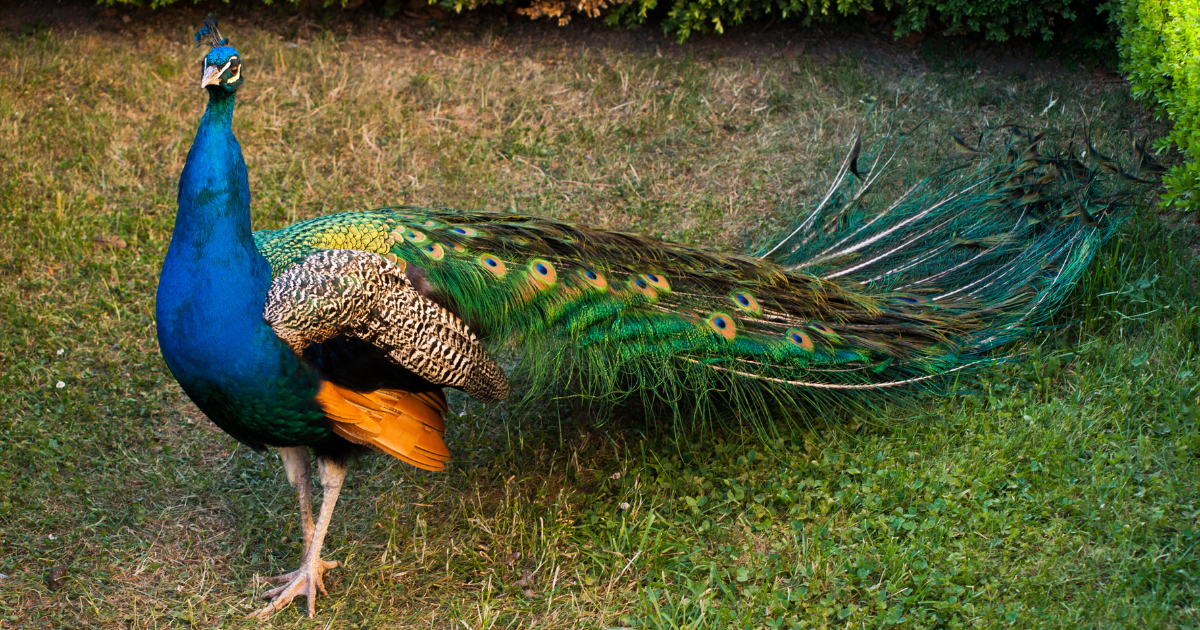
The peacock’s fan-shaped tail, or train, is arguably one of the most recognizable features in the animal kingdom. Comprising over 200 elongated upper-tail coverts, each feather is adorned with striking “eye spots” that shimmer in vibrant blues, greens, and golds. This incredible display is more than mere decoration—it plays a crucial role in courtship and mating rituals, serving as a visual signal of fitness and genetic health. But while the tail grabs our attention, it’s only the tip of the iceberg when it comes to understanding peacocks.

What Lies Beneath the Surface: Behavioral Insights
Beneath the colorful display lies a bird with surprising intelligence and intricate behaviors. Peacocks communicate through a combination of loud vocalizations, subtle body language, and physical displays. Males compete fiercely for attention during breeding season, not only through their extravagant feathers but also with synchronized dances and strategic positioning. Outside of mating, peacocks maintain territories, form loose social groups, and use sharp alert calls to warn others of danger. By exploring these behaviors, we begin to understand that peacocks are more than a pretty tail—they are active participants in a dynamic and competitive world.
Peacock Anatomy: Understanding the Tail and Its Purpose
To truly appreciate peacock behavior, we need to first understand the anatomy behind their most iconic feature: the tail. Often mistaken as a functional part of the bird’s body, the “tail” is actually a display of elongated upper-tail coverts, which the peacock fans out to attract mates. This eye-catching adaptation is a product of sexual selection and plays a key role in the bird’s reproductive success. But as we’ll see, peacocks are more than a pretty tail—their anatomy supports a range of unique behaviors that go well beyond display.
The Role of the Tail in Courtship
During mating season, male peacocks perform intricate displays to attract the attention of nearby females (peahens). They fan their train into a large semicircular fan, vibrating the feathers to create a rustling sound while strutting proudly. These movements, combined with the vivid coloration and symmetrical “eye spots,” are signals of genetic quality and health. Females are more likely to choose males with fuller, brighter trains—making the tail a critical component in the peacock’s reproductive strategy. However, these displays are not just about beauty—they are the result of careful timing, energy expenditure, and social awareness.
Feathers, Colors, and Evolutionary Significance
The brilliant hues of the peacock’s feathers aren’t caused by pigments but by microscopic structures that reflect light—a phenomenon known as structural coloration. This evolutionary marvel not only enhances visual appeal but also helps males stand out in dense environments. Yet, carrying such a massive and heavy train comes at a cost: it can hinder flight and make peacocks more visible to predators. This trade-off is a perfect example of nature’s balancing act, where survival and reproduction must be weighed. Still, the tail remains central to their identity, even as the bird’s intelligence and adaptability show they are more than a pretty tail.
Courtship Rituals: The Peacock’s Elaborate Dance
One of the most fascinating aspects of peacock behavior is their dramatic courtship display. While many birds engage in mating rituals, the peacock’s is among the most theatrical in the animal kingdom. It’s a performance that blends visual splendor, sound, and movement in a calculated effort to win over a potential mate. But even this iconic dance is only one piece of the behavioral puzzle, reminding us once again that peacocks are more than a pretty tail—they are strategic performers in the dance of evolution.
The Famous Tail Display: How and Why Peacocks Strut
When a male spots a nearby peahen, he begins his signature display. The enormous train is lifted and fanned out like a living canvas, creating an eye-catching wall of color and motion. But this isn’t just a random show of feathers. Peacocks often position themselves to maximize light reflection and visibility, ensuring that the “eyes” on their feathers catch the sun just right. Scientists have found that the more symmetrical and vibrant the tail, the better the male’s chances of attracting a mate. Still, the display alone isn’t enough—it must be timed perfectly and performed with confidence.

Vocalizations and Their Role in Attraction
Peacocks aren’t just silent showmen—they’re loud, too. Their calls can be heard over long distances, especially during the breeding season. Males use these vocalizations to advertise their presence and dominance, sometimes even before the display begins. Studies suggest that females may use the pitch, frequency, and duration of these calls to assess a male’s fitness. The sounds serve as both a mating call and a warning to rival males.
The Dance of Mating: What Makes the Peacock So Enticing?
What truly sets peacocks apart is the subtlety of their dance. During the display, the male will often shake his tail feathers, creating a low-frequency rattling sound known as infrasound—something that is barely audible to humans but perceptible to peahens. This vibration draws attention to the movement and rhythm of the display. The peacock also circles the female, ensuring she sees his train from every angle. This dynamic choreography is not just instinct—it reflects sensitivity, social awareness, and timing.
Social Structure and Territory: How Peacocks Live
Beyond their stunning courtship displays, peacocks lead structured and competitive lives that reveal much about their intelligence and adaptability. These birds are not solitary wanderers—they interact with rivals, form loose groups, and fiercely defend their turf. To truly understand the peacock, one must look beyond the feathers and observe how they navigate social hierarchies and territorial challenges.
Dominance Hierarchies: The Alpha Peacock
Male peacocks often establish dominance hierarchies, especially during breeding season. The most dominant males usually control the best display spots—open areas where they can easily be seen and heard by females. These prime locations aren’t won by looks alone. Peacocks must defend them from rivals through aggressive displays, loud calls, and sometimes physical confrontations. These interactions reveal the bird’s awareness of status, competition, and strategy. It’s not all about beauty—dominance is earned through persistence and presence, proving once again that the peacock is more than a pretty tail.

Defending Territory: The Peacock’s Loud and Proud Calls
Peacocks are famously vocal, and their calls serve multiple purposes beyond courtship. Males use loud, high-pitched cries to mark and defend their territory from intruders. These calls can carry long distances, alerting both rivals and potential mates to the male’s location. They also use a distinct “caw” when sensing predators or disturbances, acting as a form of early warning for nearby birds. This vocal vigilance adds another layer to their behavioral complexity—yet another reason why they’re more than a pretty tail.
Flock Dynamics: Cooperation and Conflict Among Peafowl
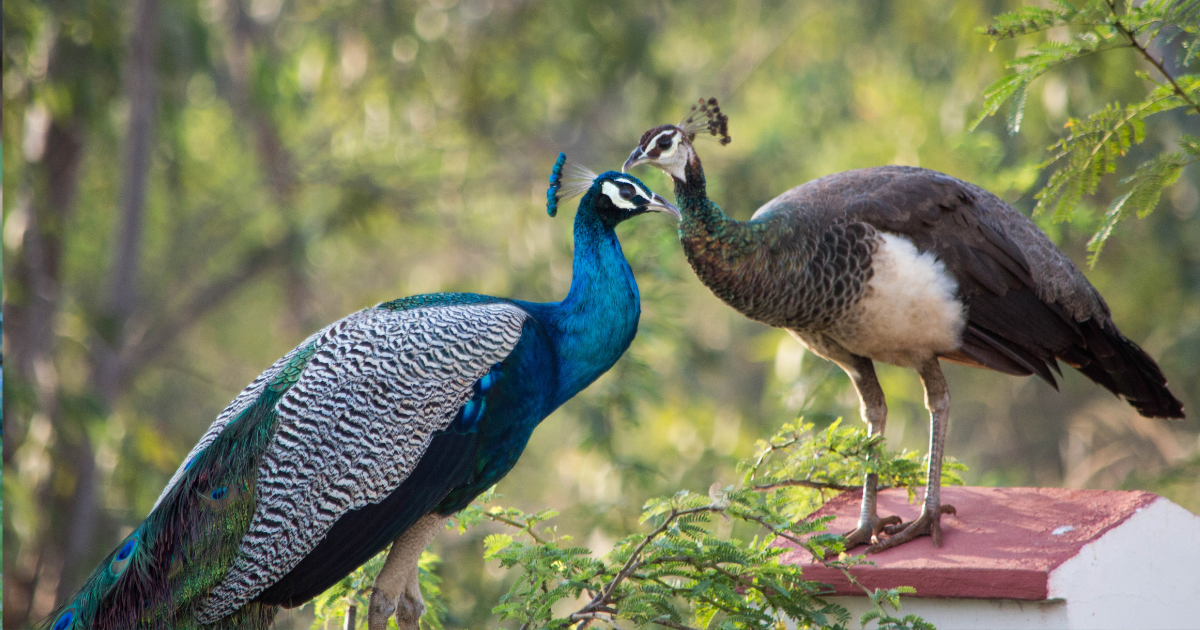
While males are often seen alone during the breeding season, peafowl (the term for the species as a whole) do form loose flocks outside of it. These groups may include females, juveniles, and subordinate males. Within these flocks, communication and social tolerance are essential. Peacocks use body language and vocal cues to maintain order and avoid unnecessary conflict. Observing these interactions sheds light on their social intelligence and adaptability, showing that even in group life, peacocks are more than a pretty tail—they are intelligent birds with rich, dynamic relationships.
Peacock Intelligence and Behavior
When people think of peacocks, they often focus on their dazzling appearance—but these birds are far more than decorative. Peacocks demonstrate problem-solving skills, adaptability, and complex communication, both in the wild and in captivity. Their behavior reveals a level of awareness that challenges the stereotype of birds as purely instinct-driven.
Problem-Solving and Adaptability in the Wild
Peacocks have shown surprising cognitive abilities in various settings. In the wild, they can navigate complex terrains, avoid predators with keen awareness, and modify their behavior based on past experiences. For example, they learn to avoid human presence when hunted, but in protected environments, they readily adapt to people and even forage near them. In captivity, peacocks have been observed solving simple puzzles, opening latches, and remembering feeding schedules—behaviors that reflect memory and learning.
The Role of Peacocks in Their Ecosystem
Despite their flashy looks, peacocks play an important ecological role. As omnivores, they consume a wide range of insects, seeds, and small creatures, helping control pest populations and disperse plant seeds through their droppings. Their loud calls also serve as natural alarms, warning other animals of nearby danger, including predators. In this way, they contribute to the safety and balance of the ecosystem around them. These roles highlight that peacocks are not just ornamental birds—they’re active participants in their habitats.
Additional Resources for Wildlife Enthusiasts
National Geographic (www.nationalgeographic.com)
Rich in articles, documentaries, and photography featuring wildlife behavior, conservation, and ecosystems.ARKive (www.wildscreen.org/arkive) (now archived)
A collection of videos, images, and facts about endangered species and global biodiversity.BBC Earth (www.bbcearth.com)
Insightful stories and stunning visuals from the makers of Planet Earth, covering a wide range of wildlife.Cornell Lab of Ornithology (www.birds.cornell.edu)
A must for bird lovers, offering live cams, ID tools, behavior analysis, and citizen science opportunities.iNaturalist (www.inaturalist.org)
A community where users upload wildlife sightings, get species identified, and contribute to biodiversity data.
7 Comments
Good https://is.gd/N1ikS2
Good https://is.gd/N1ikS2
Awesome https://is.gd/N1ikS2
Awesome https://is.gd/N1ikS2
Very good https://is.gd/N1ikS2
Awesome https://is.gd/N1ikS2
Awesome https://is.gd/N1ikS2